
- Arrest Records
- Judgments
- Bankruptcies
- DUIs & DWIs
- Felonies
- Warrants
- Jail Records
- Lien Records
- Sex Offenses
- Misdemeanors
- Criminal Records
- Federal Dockets
What are South Carolina Court Records?
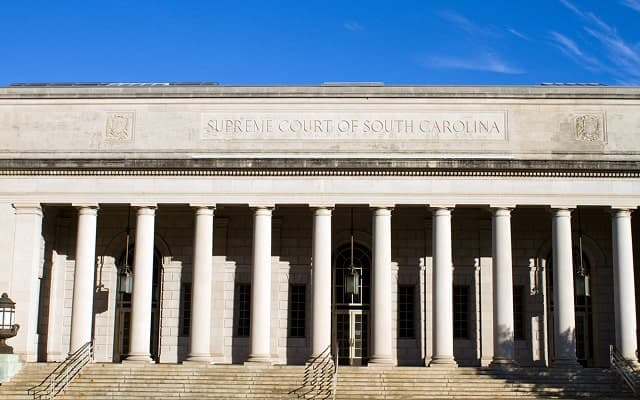
With 5.7 million citizens, South Carolina is the 23rd most populous state in the union. South Carolina courts work to maintain public safety and provide fair and impartial solutions to everyday problems. While the statewide figures are not readily available, well over 500,000 cases are handled annually by the state's legal system. The South Carolina judicial system consists of a state supreme court, a court of appeals, circuit courts, masters-in-equity courts, family courts, magistrate courts, municipal courts, and probate courts.
In South Carolina, court records are open to the public upon request and are regarded as public records in the state. These records, which include filings, depositions, testimonies, affidavits, summons, dockets, and judgments, are created and kept by the courts. Among these records are:
Judgments and Orders
These documents contain the verdicts of the jury or court. The court signs them following the trial. They describe each party's obligations and repercussions.
Evidence
This is concrete proof discovered during police investigations, as well as witness testimony from both sides of the case throughout the trial.
Briefs
These are written arguments provided by lawyers to the court. They are meant to help the court settle the legal issues in the case.
Transcripts
These are written accounts of court proceedings that record all that is said during the trial. They are especially helpful when submitting supporting documentation for a motion or an appeal request.
Affidavits
These are sworn statements of fact that can be used in a number of court cases, including family and civil litigation cases like divorces and bankruptcy disputes. When live sworn testimony is not possible, it is one of the most often used legal documents as evidence.
Pleadings
These are official written statements in which each party to the case lays out their charges. They include motions, plea agreements, and complaints.
Anyone who knows the specifics of a case, like the names of the parties or case numbers, can access the majority of South Carolina court records. However, certain records, like juvenile and law enforcement records, are exempt.
Types of Court Cases
The two primary types of court cases are civil and criminal. The degree of proof required and the potential punishment are the primary distinctions between these case types. Other minor categories include traffic cases and family cases.
Civil Cases
In civil trials, the courts settle disputes between people and organizations. Civil cases do not carry jail time or other severe rights violations. Instead, they are resolved by paying fines, addressing the underlying issue, or putting an end to a specific behavior. Their objective is to settle disputes and provide the plaintiff a sense of fairness.
Civil litigation frequently starts when one person or group (the plaintiff) alleges that another person or group (the defendant) has damaged them. To make up for their losses or injuries, the plaintiff may pursue damages or monetary recompense. Additionally, they may request an injunction, which prevents the offender from continuing to commit an offensive act.
Civil cases can be decided by either a jury or a judge after a trial. However, some parties choose an out-of-court settlement, which typically entails a financial arrangement. Unlike in criminal trials, there is no legal right to counsel in a civil lawsuit. Civil parties must either employ legal counsel or represent themselves in court.
The standard of proof that civil attorneys must fulfill is called the "preponderance of the evidence." This suggests that there must be a greater likelihood that the evidence is true than that which opposes it. Judgements are mostly based on the strength of the evidence presented, not the quantity of it.
Criminal Cases
A criminal case typically starts when a government prosecutor makes a criminal accusation against a person. The purpose of a criminal case is to either rehabilitate or keep criminals out of society.
In criminal proceedings, defendants are entitled to a jury of their peers. The judge interviews each juror to eliminate any potential bias, and each jury is hand-picked from a randomly chosen pool of district residents. Defendants also have the option of a bench trial, which is a trial without a jury. Unlike in civil cases, defendants in criminal cases are entitled to legal representation (known as a public defender in the US).
In criminal trials, jurors must vote unanimously to meet the "beyond a reasonable doubt" standard. This is because a criminal proceeding could result in harsher sanctions if an individual is found to be guilty of the crime. In a criminal case, the punishment could be community service, jail time, a fine, or a combination of all three.
What Are the Different Courts in South Carolina?
South Carolina's unified court system consists of the Supreme Court, the Court of Appeals, circuit-level trial courts in 16 judicial circuits covering 46 counties, and the family, probate, magistrate and municipal courts. The state's judicial budget is an estimated ~$133 million for fiscal year 2026.
| Court Level | Court Name | Jurisdiction | Key Functions |
|---|---|---|---|
| Appellate | Supreme Court | Statewide; five justices | Exclusive appeals in death penalty and constitutional challenges, review of Court of Appeals decisions, and rules and discipline for the courts and the bar |
| Appellate | Court of Appeals | Statewide; nine judges | Hears nearly all direct appeals from circuit courts, family courts and state administrative bodies |
| General Jurisdiction | Circuit Court | Civil (Common Pleas) and criminal (General Sessions) cases in 16 circuits | Handles major civil disputes and felony cases, and hears appeals from probate, magistrate and municipal courts |
| General Jurisdiction | Family Court | Exclusive jurisdiction over family and domestic matters and most juvenile offenses | Handles divorce, custody, support, adoption, termination of parental rights and juvenile delinquency |
| Limited Jurisdiction | Probate Court | Estates, guardianships, conservatorships, marriage licenses and trusts | Administers estates and trusts, handles minor settlements under $25,000 and involuntary commitments |
| Limited Jurisdiction | Magistrate Court | Civil claims up to $7,500 and minor criminal offenses | Handles small civil claims, offenses with fines up to $500 or 30 days in jail, bail, warrants and preliminary hearings |
| Limited Jurisdiction | Municipal Court | Municipal ordinance violations and misdemeanors within city limits; no civil jurisdiction | Handles traffic and ordinance cases with fines up to $500 or 30 days in jail, and sets bail |
How Many Federal Courts Are In South Carolina?
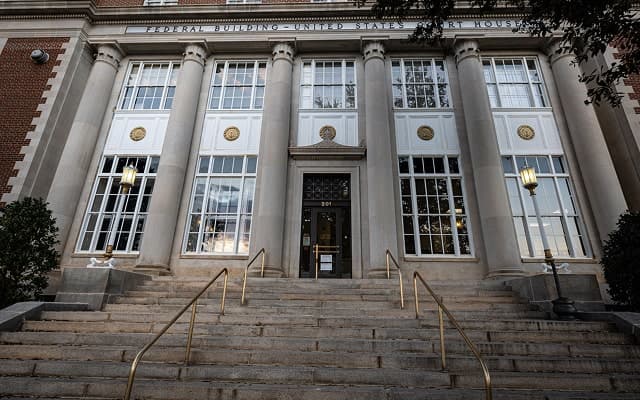
The United States District Court for the District of South Carolina is the federal court in South Carolina. There are 14 district judges headed by a Chief District Judge and 10 magistrates. This court is the starting point for federal disputes and lawsuits and has the authority to hear appeals from state courts.
The US president nominates judges who are confirmed by the US Senate to serve on the federal district courts. These judges are appointed to serve for life. The U.S. Court of Appeals for the Fourth Circuit is responsible for hearing appeals from this court.
How Many Court Cases Are Filed Each Year in South Carolina?
South Carolina's trial courts handled an estimated ~916,000 new cases in fiscal year 2025–26, with traffic and local ordinance cases making up more than half. General Sessions criminal cases were cleared at about 108 percent of filings, and the other categories are estimated to clear near 100 percent.
| Case Type | Annual Filings | % of Total | Common Offense/Subtype | Clearance Rate |
|---|---|---|---|---|
| Traffic | ~490,000 | ~53.5% | Speeding, other moving violations and local ordinance offenses heard in magistrate and municipal courts | ~100% |
| Criminal | 131,353 | 14.3% | Felonies and serious misdemeanors in General Sessions, including drug, theft and violent offenses | 108.0% |
| Civil | 100,511 | 11.0% | Debt collection, foreclosure, contract, personal injury and judgment filings in Common Pleas | ~100% |
| Small Claims | ~95,000 | ~10.4% | Magistrate court civil claims up to $7,500, including landlord-tenant cases | ~100% |
| Domestic Relations | 40,492 | 4.4% | Divorce, custody, child support, separate maintenance and protection from domestic abuse | ~100% |
| Juvenile | 16,584 | 1.8% | Delinquency, status offenses, and child abuse and neglect cases | ~100% |
| Other | ~42,300 | ~4.6% | Probate estates and guardianship and conservatorship matters | ~97% |
| Total | ~916,240 | 100% | — | ~101% |
How Do I Look Up Court Cases in South Carolina?

The Clerk of Court's office in each county is responsible for maintaining South Carolina's court records. Once you have located the appropriate court, you can either visit the clerk of court's office in person or send a mail request to view and/or copy the court case. The judicial branch of South Carolina keeps an online county map with the most recent contact details for the state's clerks of court.
You should include details on the criminal court case and the necessary payment (money orders or checks made payable to the court) to cover the cost of the records search and/or the total number of copies of the desired record.
You may also access court records online via the South Carolina judicial branch's Case Record Search database. You may use this platform to search for records by county, person, or case number.
Number of Active Judges — State & Federal
South Carolina has an estimated ~473 active judges across its appellate, circuit, family, probate and magistrate courts. State judges at the appellate, circuit and family levels are elected by the General Assembly, and nine sitting federal judges serve on the U.S. District Court.
| Court | Jurisdiction | Active Judges | Selection Method |
|---|---|---|---|
| Supreme Court | Statewide appellate | 5 | Elected by the General Assembly to ten-year terms |
| Court of Appeals | Statewide intermediate appellate | 9 | Elected by the General Assembly to six-year terms |
| Circuit Court | General jurisdiction civil and criminal trials | 49 | Elected by the General Assembly to six-year terms |
| Family Court | Domestic relations and juvenile matters | ~55 | Elected by the General Assembly to six-year terms |
| Probate Court | Estates, guardianships and trusts (one judge in each of 46 counties) | 46 | Elected by county voters to four-year terms |
| Magistrate Court | Minor civil and criminal matters and traffic offenses | ~300 | Appointed by the Governor with Senate consent to four-year terms |
| U.S. District Court for the District of South Carolina | Federal district court | 9 | Nominated by the President and confirmed by the U.S. Senate |
| Total Active Judges | — | ~473 | — |
What Court Records Are Not Available to the Public in South Carolina?
Many records are available to the public in South Carolina. However, some court records are exempt from public access. Among these records are:
- Records about minors
- Certain law enforcement records, such as warrants that have not been executed
- Inmate records that have been redacted
- Certain personal information
- Trade secrets
- Information that breaches the attorney-client privilege
- Information that could identify the person who files a complaint or provides information claiming a legal violation
Average Case Processing Time & Clearance Rates
Case processing time in South Carolina varies by case type, from a few weeks for most traffic tickets to well over a year for felony and contested civil cases. The durations below are estimated from published average case ages and comparable states, and clearance rates reflect fiscal year 2025–26 data where available.
| Case Type | Court Level | Average Processing Time | Description | Clearance Rate |
|---|---|---|---|---|
| Traffic & Parking | Limited Jurisdiction | ~30–90 days | Most tickets are resolved by payment or a guilty plea in magistrate or municipal court, with contested cases heard at a short bench trial | ~100% |
| Small Claims | Limited Jurisdiction | ~60–120 days | Magistrate court cases are served and heard at a single bench or jury trial, with appeals to circuit court | ~100% |
| Misdemeanor Criminal | Limited Jurisdiction | ~3–9 months | Most are resolved by plea or dismissal in magistrate or municipal court after bond and pretrial hearings | ~100% |
| Civil Cases | General Jurisdiction | ~12–24 months | Pleadings, discovery and mediation precede settlement, dismissal or trial in Common Pleas | ~100% |
| Domestic Relations | General Jurisdiction | ~6–12 months | Divorce and custody cases settle by agreement or proceed to a contested hearing; protection orders are heard within days | ~100% |
| Felony Criminal | General Jurisdiction | ~15–20 months | Bond hearing, indictment, plea negotiations and sentencing in General Sessions, with a minority tried before a jury | 108.0% |